The Symbol
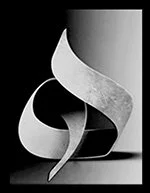
The logo carries the Persian letter “H”, the first breath of Harchgani. It rises from silence — a curve between shadow and light, echoing the movement of a brush across canvas. Its form is both flame and whisper, a gesture of becoming. It stands for the space where creation begins: not in noise, but in stillness — where presence shapes the unseen.
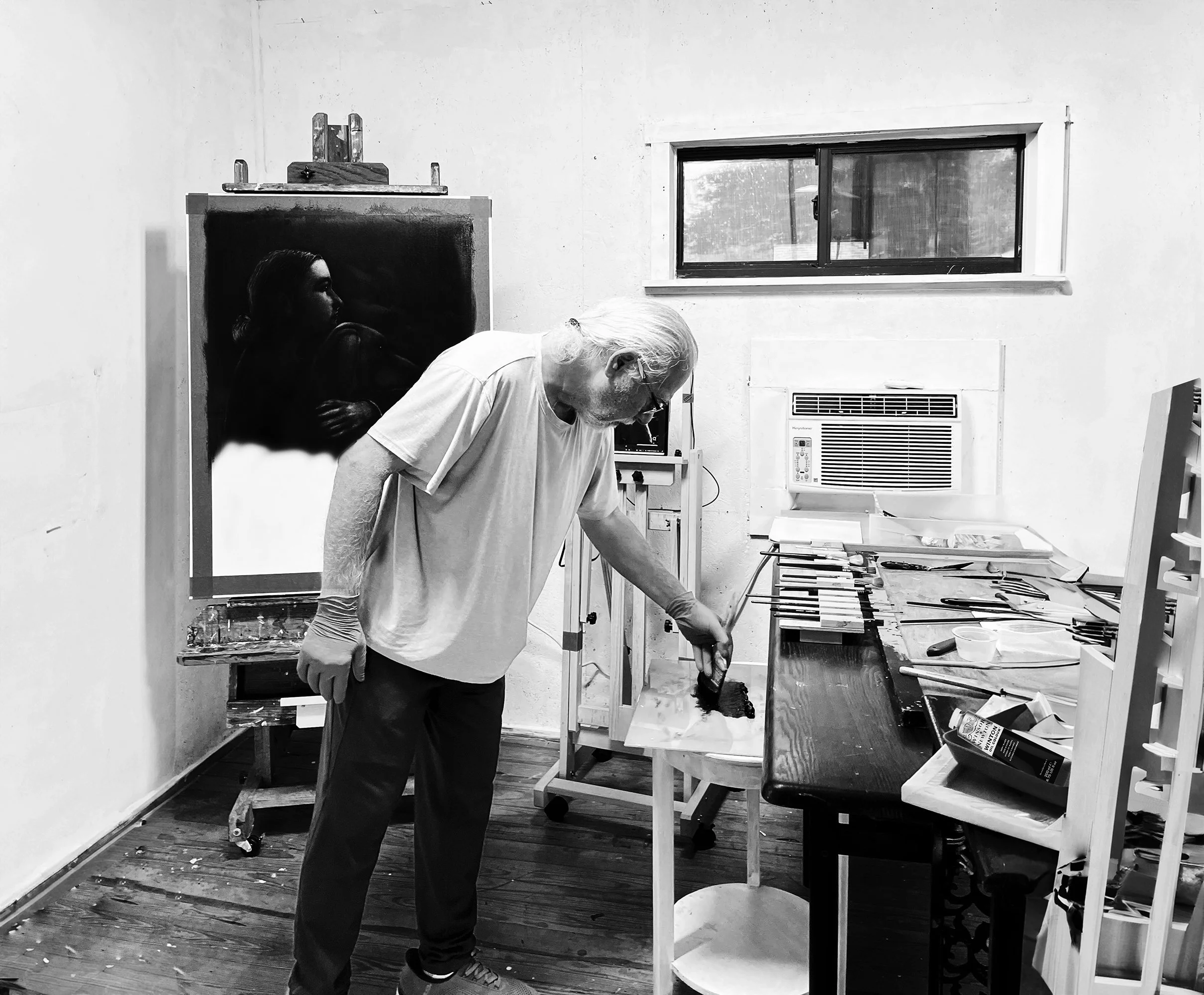
I paint to construct myself. My work emerges from instinct, not measurement — the imperfect honesty of my left hand. I use shadow as revelation, light as interrogation, and the human body as a psychological landscape. My medieval symbols are modern truths, expressing identity shaped by struggle. Intimate Noir is not my style; it is my world. Every painting is a fragment of who I am becoming.
This Sunday, September 13, artist Mani Harchgani presents his Intimate Noir and Medieval series at 50 Penn Place Gallery in Oklahoma City. The exhibition marks a defining moment in his artistic journey — a transition from private creation to public encounter. Through shadow, candlelight, and human vulnerability, Harchgani’s monochrome works explore freedom, silence, and the unseen weight of spirit. Each painting invites viewers into a world where darkness becomes illumination, and emotion finds its form in restraint.
Artist Philosophy — Mani Harchgani
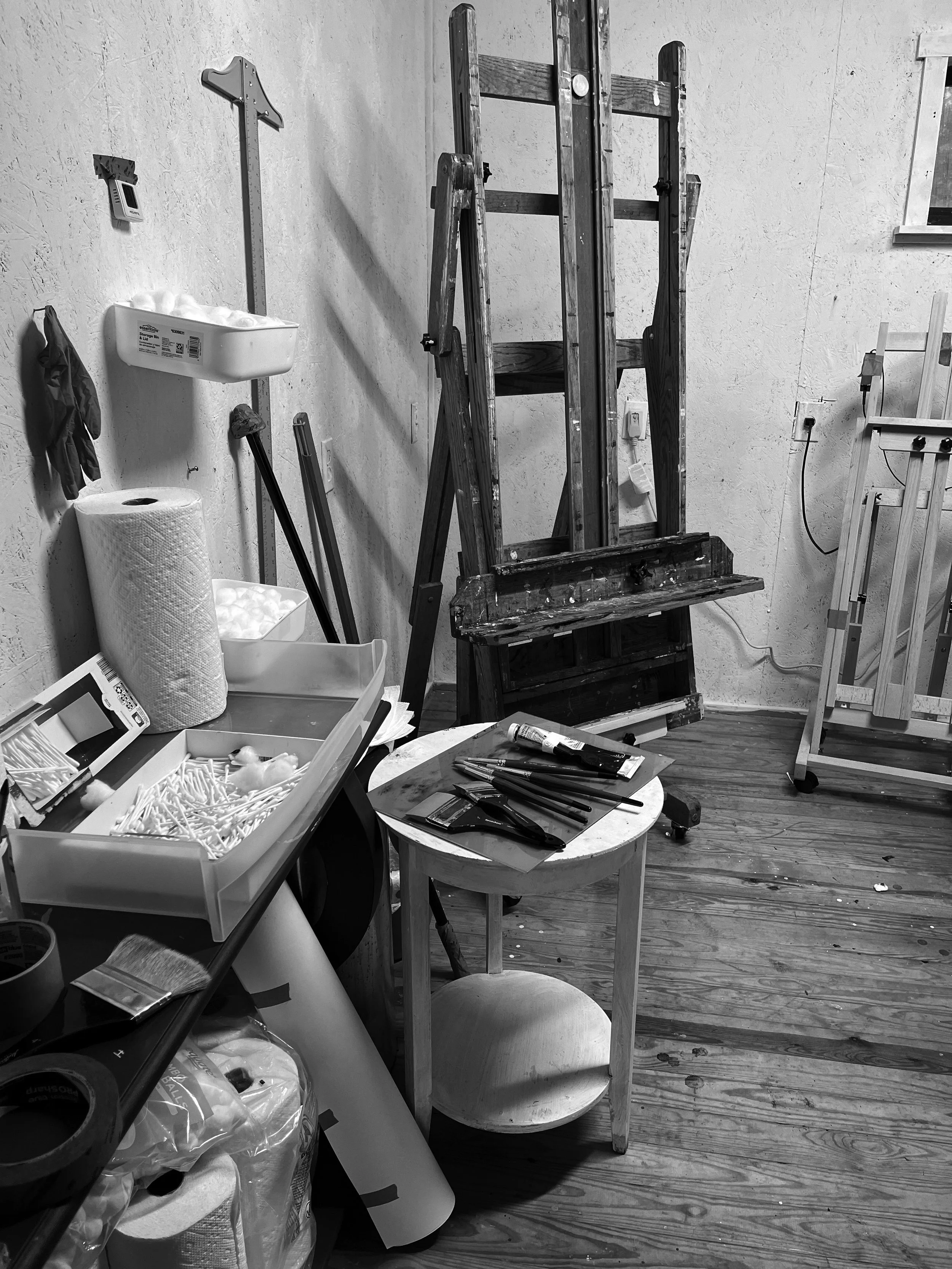
My work begins where traditional painting ends. I reject the hierarchy of tools, the seduction of color, and the performance of technique. Instead, I paint with what the world considers disposable: cotton balls, Q‑tips, rolled napkins, the soft edges of ordinary objects. These materials allow me to shape light with my hands rather than with instruments of precision. They make the painting human, imperfect, breathing.
I use only black oil because black is not a color — it is a condition. It is the space where memory hides, where intimacy becomes fragile, where silence becomes architecture. In black, every gesture matters. Every pressure of cotton, every smear of oil, every softened edge becomes a confession. Light is not added; it is revealed from darkness.
My technique is an act of resistance against spectacle. I do not paint to impress. I paint to expose the quiet places inside the human experience — the rooms where longing sits, the corners where fear rests, the warmth that flickers even in confinement. The medieval atmosphere in my work is not nostalgia; it is a reminder that humanity has always lived between shadow and flame.
I believe art is not decoration, not performance, not proof of intelligence. Art is the residue of being alive. It is the trace left behind when emotion touches the physical world. My paintings are not statements of mastery; they are records of vulnerability. They exist because silence needs shape.
🖤 Artist Style Statement: Why My Work Exists in Black, White, and Discipline
1. The Philosophy Behind My Uniformity
My paintings follow strict rules — same size, same price, same black and white palette, same signature placement — because my art is built on discipline. This discipline is not aesthetic convenience; it is a psychological framework. It forces the viewer to confront the subject without distraction, without color, without escape.
2. Why Black and White
Black and white is not minimalism. It is truth stripped of decoration. Color can seduce, soften, or lie. Black and white exposes the soul of the subject — the struggle, the silence, the weight of existence. It creates a timeless, medieval darkness that aligns with my Intimate Noir style.
3. Why Every Painting Is the Same Size
Uniform size creates:
Equality — no painting is “more important” than another
Focus — the viewer meets each piece with the same physical presence
Identity — my work becomes instantly recognizable
Discipline — the frame becomes a ritual, a boundary I must fight inside
The size becomes a battlefield where the subject must survive.
4. Why Every Painting Has the Same Price
I refuse to let the market decide the value of human struggle. Every painting carries the same emotional weight, the same discipline, the same truth. Pricing them equally is a statement: The value of suffering does not fluctuate.
5. Why My Signature Is Always on the Left
The left side is the side of the heart. Placing my signature there is a ritual — a mark of presence, not ownership. It is the point where the artist meets the viewer.
6. Why My Borders Are Always White with a Black Line
The border is not decoration. It is a threshold. The white edge represents the world outside the painting — reality. The black line is the barrier between reality and the darkness inside the frame. Crossing that line is entering the psychological space of the painting.
7. Why My Style Must Stay Consistent
Consistency is not repetition. Consistency is identity. It is how the viewer knows they are entering my world — a world built from:
Medieval light
Single‑torch illumination
Shadow-heavy compositions
Human vulnerability
Silence
Struggle
Freedom
The body as a battlefield
8. Why I Paint This Way
Because I believe art should confront, not comfort. Because I believe darkness reveals more than light. Because I believe discipline creates truth. Because I believe struggle deserves a visual language. Because I believe identity is built, not found.
9 . No Print
I do not allow prints or reproductions of my work. Each painting exists only as a single physical presence — a ritual of black, light, and silence. My art is not an image to be copied; it is an object meant to be encountered. The texture, the darkness, the weight, the breath of the piece cannot survive duplication.
When you stand before one of my paintings, you are seeing the only version that will ever exist.
“I stopped painting what I thought people wanted. I started painting what I needed. “